
“Not Giving My Son the Priesthood”
In the Church of Jesus Christ of Latter-day Saints, all boys advance in the Priesthood on the first Sunday of the year they turn twelve, fourteen, and sixteen. It’s usually an important step in their lives, the ordination done (if possible) by their fathers, adding a bit of patriarchal connection to the act.
My father was quite proud to ordain me as I went through the different offices in the Priesthood. I don’t remember much about those occasions; only that those advancements were less a choice than an expectation for a boy’s life, much like being in the Boy Scouts. I do know that my father taught me that the Priesthood was a tool for service. He instilled in me that I should use it to bless others, without hesitation or self-interest in how it manifests. My mother’s contribution was a deep knowledge that the Priesthood must never be used as an excuse to exert authority over others, something she herself had often experienced.
I have five children, four of whom have or are going through the Young Men’s program. The oldest were ordained by their grandfather (they felt more connected to him than to me, as I didn’t live near them at the time). But now, with my youngest son about to be ordained this year, the opportunity to ordain is lost. Future generations will not see my name in their Priesthood lineage with pride. My place in the Patriarchal orders of the Priesthood has been suspended, likely never to be reinstated. I am a transgender woman, one who has set aside her temple recommend and authorization to exercise the Priesthood by embracing who she is, medically and socially.
My place in the Patriarchal orders of the Priesthood has been suspended, likely never to be reinstated. I am a transgender woman, one who has set aside her temple recommend and authorization to exercise the Priesthood by embracing who she is, medically and socially.
I knew it was coming, my youngest son’s ordination. I knew this was one of the major family events in the Church that I had willfully given up, knew how it would look to others as a reminder that I was abandoning the faith and failing my family. It was one of the many parts of the Church I would be missing, including seeing my children marry in the temple if they chose to do so. But even when you have prepared yourself for it, when those times come, feelings of loss arise.1
The first Sabbath of the year was quite like any other winter day, with rain verging on the possibility of snow. We all squeezed into our pew — the kids stuck to their electronics, me wondering if it would be another day feeling cramped in the large chapel full of people. Among the long list of ordinations to be affirmed by the congregation, my youngest’s name was called. He got to his feet, as requested, a little unsure of himself as most are the first time they are called to stand to be recognized. He didn’t think to also raise his hand in affirmation, which (when I was his age) was used as a way to break the tension of having so many eyes on you. An appointment for the actual ordination was set for later in the day.
That afternoon, with the rain looking more like snow but immediately melting on contact with the solidity of the earth, we arrived for our scheduled time. We waited as patiently as possible in the hard folding chairs, the quiet of the nearly empty church building and the isolation of our disjointed family seeping into us. It was just the five of us — three kids and two parents. For most families, it’s a time for extended family to attend and witness what is considered to be a major step in a young man’s progression. But we had no family nearby. Those who were distant were not very interested and a fair number had long passed from this life.
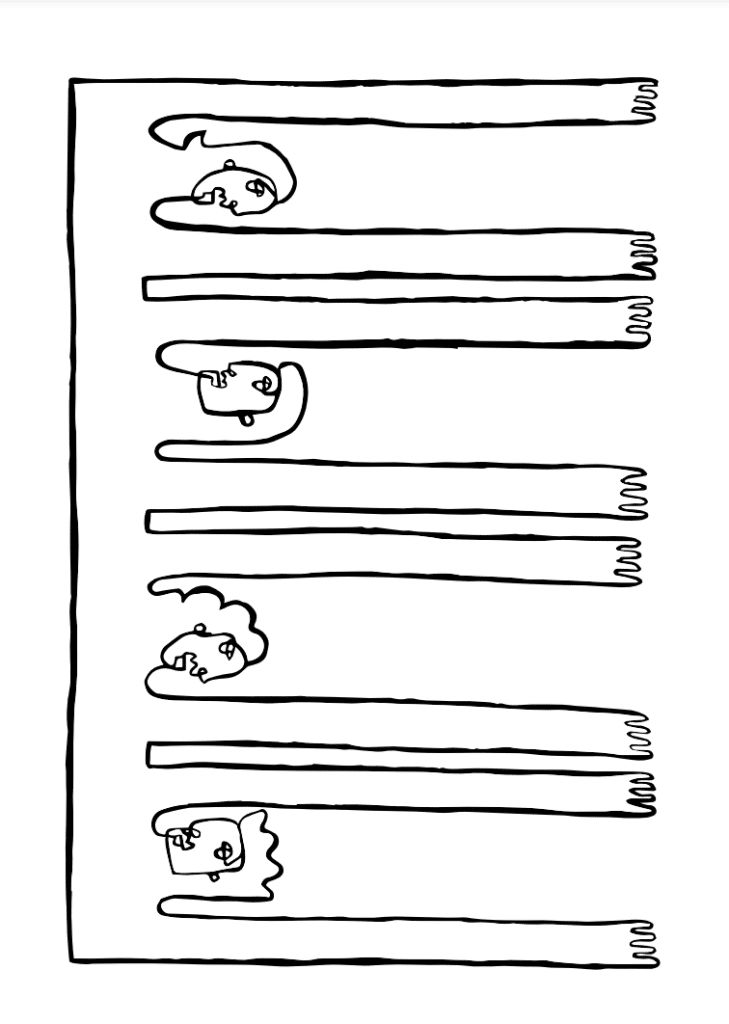
“Reaching For Heaven” from The Prayerseries By Riley | theurim.com/riley | @prayerseriesbyriley
The family before ours started filing out of the room, looking joyful. Some exchanged greetings with us as they passed. This family was very much in the vein of a large extended family, despite the loss of the father to cancer the previous year. Family, grandparents, cousins — as many as they could gather were there.
After seeing off the previous family, the Bishop then invited us into his office. It was the usual Mormon chapel classroom size, with chairs around the perimeter and a desk at one end. My second youngest son decided the whiteboards were there to be drawn upon and immediately set to it. Everyone else found chairs and waited. My youngest had found bubble gum to chew at some point and was busy practicing small bubbles. He was directed to the solitary chair in the middle of the room. The Bishop made an attempt at light conversation, taking the chance to ask about the two Priesthoods to help draw the boy out.
It was a rather simple ordination, using the words specifically written in the Doctrine and Covenants for conferring on him the Aaronic Priesthood and ordaining him to be a Deacon. The bishop then gave some small blessings and encouragement as directed by the Holy Spirit. My young son continued his bubble blowing throughout.
I couldn’t concentrate on the blessing given at the time. Though I had tried to prepare myself for this event, I was stuck wondering if I should feel more about not even being part of the circle of men performing the ordination. Should I be feeling regret? But there was nothing, no pride, no wishing things were different for me. Yes, there was the usual irritation that his two mothers could not be part of the circle and that his sister would never be so ordained, but it really was as simple as what my parents had taught me: that for the power of the Priesthood, who used it truly did not matter.
Afterward, there were handshakes from those involved in the ordination, and the Bishop leaned down to let the new deacon know that this was a good time to hug his mother. Once he’d done that, there was a hesitant, “. . . and Alma.”
I don’t entirely blame him for the hesitation. He has not really worked out the preferred relationships involved, since I am no longer the boy’s father, but one of his two mothers, an almost unheard of family arrangement in the Church. I leaned into my son’s perfunctory hug, holding him a couple seconds longer to try and silently convey all I was and was not feeling into him. It was done.
None of this has affected either my or my son’s feelings about being ordained. It’s something he has chosen to do, knowing that it wouldn’t be required of him if he didn’t want to, just the next step and the addition of new responsibility in the Church. He’ll be working with his older brother and other deacons in passing the Sacrament, enjoying the first few times but probably falling into bored necessity as the months wear on, just as untold numbers of deacons have over the decades.
For me, the Church continues to be the place where I need to be, even if there are many who’d prefer I no longer participate. I will continue to teach and support my children as they grow and learn and find what spirituality and/or religion works for them. I can hope they find one similar to what I have, but the important part is for them to build their own house of faith, their own expressions of how they interact (or not) with the divine.
And we will continue to journey onward, having faith we will be guided in the paths that are right for our own growth. Mine will involve giving my newly ordained son a Mother’s Blessing and talking of its long history in the Church. I will try and teach him the same lessons my parents taught me, and continue doing what I can to make him know he is loved.
Alma Frances Pellett is a software developer and stay-at-home mom currently living in American Fork, Utah.
NOTES
See also the essay by Alma Frances Pellett, “Letting Go of My Holy Place,” in the Winter 2023 issue of Exponent II
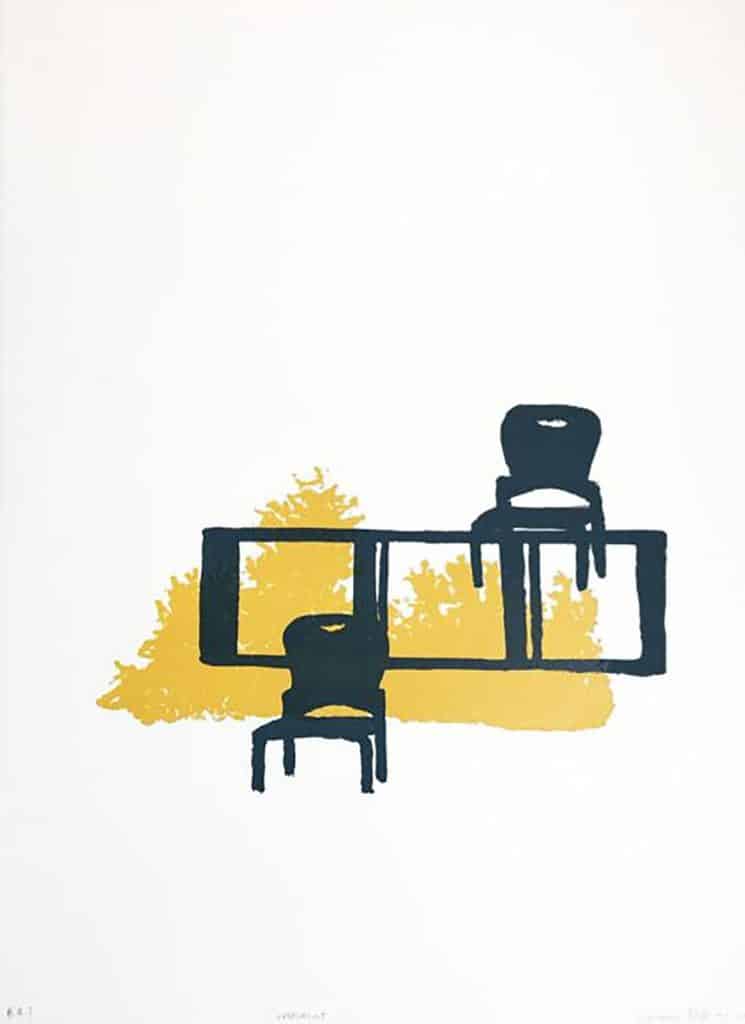
ARTIST STATEMENT
“Restraint“
This piece is part of a line of questioning regarding how we relate with and create borders around our relationship with others and the world. I was curious about how we systematically impose order over the external parts of our life in an attempt to make sense of or find meaning in what feels uncontrollable. Using symbols from both the nature and man-made settings, I am interested in creating a comparison between the wild and the domestic.
Janessa Lewis
janessalewis11.wixsite.com/my-site | @nessalewis.art
Categories: Preview
Comments (0)
No comments yet.