
Vitae per Mortem: Of Life, Through Death
Contest Honorable Mention
I spent a week in my childhood home looking for a ghost. I sat where he used to sit. I talked to him out loud.
My second published piece is my father’s obituary. “Bartlett Jackson Elliott, Sr., age 67, died on September 5th, 2025.” Written and submitted just four days after his death, it’s a paltry summary of his life, scrutinized and edited by people who were present for more of it than me, his seventh-born child. I felt insignificant in the days surrounding his death. All that felt like mine was a line at the end: “He loved us fiercely, and we carry that love through our lives with the same intensity.”
* * *
Before Dad knew about my existence, he ordered a watch with my six siblings’ names engraved on the face from one of those ads that used to come with the Sunday paper. He was devastated about the timing, but Mom loves that watch. She gets it out on special occasions. They told me, when I was little, that I was the diamond on the top of the watch, at the 12 o’clock spot — the twinkle in my daddy’s eye.
* * *
Heavenly Father, please, I’m scared and I’m angry and I don’t know what to do. What do I say? I don’t want him to be in pain. What if he dies? I don’t know what to pray for. I’m not the brother of Jared with the solution that only needs you to sign off on it. Is there a certain series of words, some secret phrase that will unlock the right combination of blessings to make everything all better? Father, I don’t know what that is. I don’t think that’s how it’s supposed to be.
* * *
He died on a Friday. I flew home on Saturday to be with my mother and autistic brothers, the twins. It would be another week until my other siblings came, until my husband arrived. I spent a week in my childhood home looking for a ghost. I sat where he used to sit. I talked to him out loud. I hoped he would join me, would answer somehow. I wished to feel him beside me. He wasn’t there. I was home for 12 days, but I couldn’t find him. I went home whispering to myself, he isn’t gone. Maybe the ghost will be waiting for me at my own door.
* * *
I was a daddy’s girl. I loved him. Once, I got hurt at a church potluck and crumpled into a ball on the grass. I screamed and wailed, “I want my daddy!” He came running and scooped me up. He always came running. And anywhere he went, I would follow, climbing into the upholstered seat of his old truck with a puff of dust. It didn’t matter where he was going — the dump, the store, the pizza place. As I got older, my requests to come along slowed. Once in a while, Dad would knock on my bedroom door and ask if I wanted to drive with him. I don’t remember saying yes often in those years. I wish I could say yes now.
* * *
I don’t want to be alone. I don’t want to be here without him. I don’t want to know he suffered, and I don’t want that to be his end. I want my dad. I want my daddy. I want my daddy, I want Daddy, please, I want Daddy —
* * *
We all worked together to take care of Mom and the twins in the aftermath. They said they needed me. We all listened when they talked a little and held them when they cried a lot. There wasn’t any question that needed to be asked. Dad taught us to take care of each other, of Mom, of the twins. We all acted just as he taught us.
* * *
Dad had a short fuse and a quick temper. He could never be mistaken for a saint, nor would he want to be. I didn’t learn to fear my father, though. The lessons I remember were quiet conversations before I fell asleep, the practiced script he taught to all of his children:
“Who loves you?”
“Mommy and Daddy love me.”
“And how long will we love you?”
“Always and forever!”
* * *
God, I only have this ache and fear and hurt, and it’s all I can do to bring it to you and hope you understand because I don’t. This is truly the most I’ve resonated with the phrase “broken heart and contrite spirit.” Is that enough?
* * *
When he was in the hospital, before anyone realized it was too late, my sister proposed a fast. We all readily agreed; a discussion of when, not if. Dad was touched and cried, just a little. I found it silly coming from him — this was his doing. He was the one who taught us to reach out to God and offer our hearts on the altar, to petition the Lord when we alone were not enough. That day, we were not enough.
* * *
Dad helped me buy my first car. He named it Squiggy, and like all of the ridiculous names he conjured up, it stuck. He drove Squiggy to Texas with me, over 1,000 miles from home, when I was 19 and obsessed with a boy I met online. I can only assume he received copious personal revelation that I would be okay. He told me before we left that no matter where I go in this world, I would always be able to find my place back home. I never doubted I could run into his arms whenever I wanted. I felt the same a year later when I married that sweet Texan boy. My father held my arm in his as he walked me down the aisle.
* * *
All I want is to hold Daddy’s hand again. I want his strong, big hand to take up mine. I don’t want to forget how he feels: the calluses, or how he’d squeeze my hand with his fingers. I don’t want him to fade away. Please, Father, if only for a moment, let me hold his hand again. Even if it’s just a dream that I won’t remember in waking, please let me hold his hand one more time.
* * *
The viewing was on a Sunday evening. It started raining while we were inside. I watched each of my siblings walk near the casket, and I watched each of them cry. My husband took our three-year-old son Oliver to see Papa. Oliver pointed and said Papa was sick. That he was sleeping. My husband agreed. He tried to explain. Oliver kept repeating; he kept asking. I didn’t have the answer for him. What parenting book includes a chapter on explaining death to someone who’s just begun to understand life?
* * *
Dad was the first one I called when my poem was selected to be published in an anthology. He was so excited; he had always loved my writing. We talked for over an hour, about the poem and the inspiration, about my miscarriage the month before, about how good it felt to have my work recognized and have a reason to celebrate in the wake of loss. We talked about how far I’d come. I described all the ways the Lord’s hand had put me exactly where I needed to be. Mom told me later that Dad teared up when he read the poem. He said it was nostalgic and reminded him of when I was a child.
* * *
I always pictured that when people die, they become a spirit and suddenly have some floodgate of knowledge open up. I imagined that they would feel joy and move along to their new, celestial calling and be surrounded by the same happiness and enlightenment. I don’t think I like that anymore. I can’t imagine Dad turning his back like that.
* * *
Oliver never fully understood. Before the funeral, we said goodbye to Dad with a family prayer. As we all said amen, he shouted, “Wake up time!” and pointed to my father. He didn’t wake up. His eyes stayed shut, his hands folded inside his sea-blue casket. There were seagulls on the lining and engraved on the braces my brothers would soon hold as they carried him to his grave.
* * *
Dad was sick most of my life, and worsened when I was an adult. He regularly missed important events in the last 10 years, but I didn’t think much of it. That’s just how it was: Dad pushed himself too hard, he would get hurt or sick, and then he would need to rest. He was too sick to come to my son’s baby blessing and called me with a voice full of sadness and pneumonia. It broke my heart that Dad rarely got to hold my son, but I assumed there would be another chance. I dreamed that he would fly to Texas when I had another child, or maybe just for a visit, and I could show him how full my life is. He would smile, give me his chuckle, and say, “Way to go, sis!”
* * *
If he doesn’t look back, does that mean that I don’t matter? God, what did you make that’s so good on the other side that Daddy wouldn’t mind leaving us? Or is Dad in a transition of mourning, too? Are they allowed that, just like us? Does Dad get a proverbial three days, like in the Bible, to remain near the body in case of a miracle, or maybe to see who stops by? It’s been more than three days. Has he gone now, for good?
* * *
Dad had been in the hospital for three days when I last spoke to him. I had videocalled, anxious to see him. Mom helped Dad hold the phone so I could talk directly to him. “So, if this next baby is a boy, would you prefer Bartlett or Jackson as the middle name?” With tired eyes, Dad still gave a smile when he realized what I meant. “Congratulations, sister. Jackson is better for a middle name.” Dad was placed in a coma the next morning. His lungs gave out less than 24 hours later, and he was gone.
* * *
Please, Lord, let my father be with my children now. Please let them know him and love him and be familiar with him before, even if they won’t when they’re with me. Please, do not let the grave rob them of him. Let not the grave rob him of them. Please don’t take away these thoughts of joy, of my children in the arms that held me. Please, I beg you, let me imagine just one more moment free of this aching reality. Please, let me believe again in a family more eternal.
* * *
I watched as my father was carried across the green. My sister brought markers to write last messages on the casket, gold and silver on its deep blue. My husband wrote a heartfelt goodbye. My son drew circles and scribbled across the top. I gave him one last piece of writing. I know he’s proud.
Always and forever.
Hannah Elliott-Lindh is a writer, wife, and mother based in Dallas Texas
Artwork by Michelle Watkins Photo
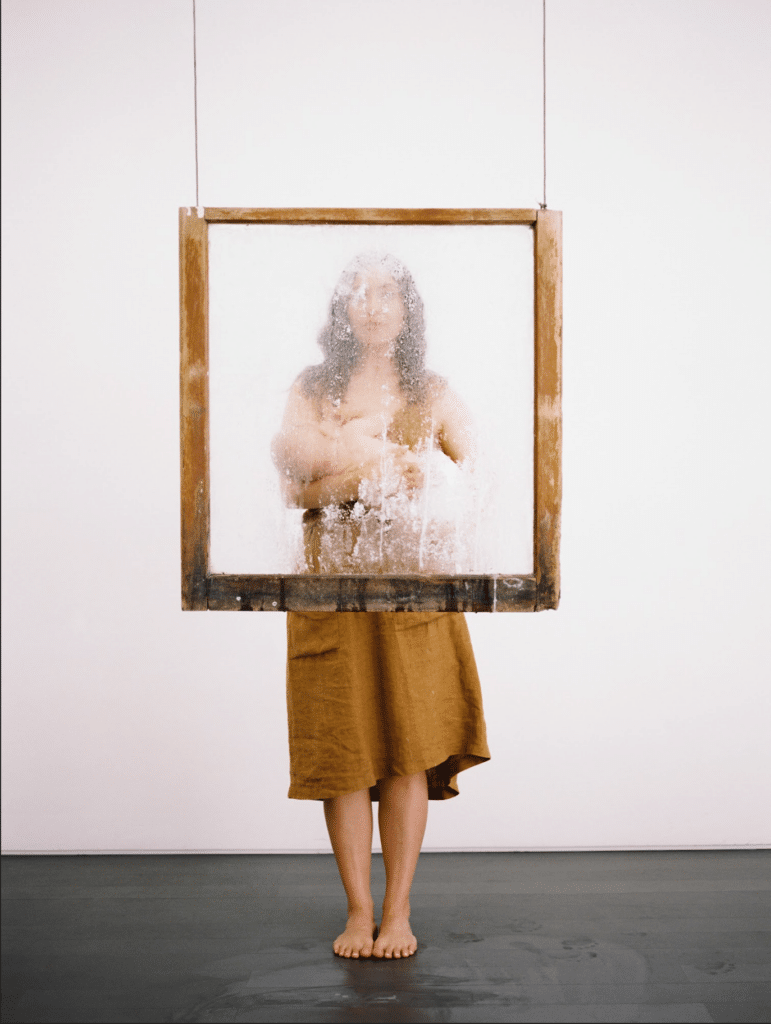
ARTIST STATEMENT
I Felt Barely Seen
120mm film taken on a Pentax 645n
I am a photographer and mother of three whose work centers on the unseen realities of motherhood within family life. Using analog film photography, I create intimate, emotionally grounded images that reflect both the struggles and beauty of caring for young children. My work is rooted in lived experience and shaped by a desire to make visible the labor, love, and complexity that so often go unacknowledged in cultural representations of motherhood. Through my work, I aim to validate mothers’ individual experiences and give them a voice in the broader conversation about how we value family care. My artist practice is rooted in empathy, authenticity, and a deep belief that sharing these unseen narratives of family life can foster greater understanding and connection, especially for women.
Michelle Watkins Photo
michellewatkinsphoto.com, @michellewatkinsphoto
Categories: Preview
Comments (0)
No comments yet.